Case studies

The decisions behind
a catering platform.

Who owns a change after a quote is accepted? Which items need to travel twice? Three case studies show how experience delivering events shaped a custom system and how its rules were tested.

Case study 01
Event operationsCustom software

One event record for the sales desk, kitchen and warehouse

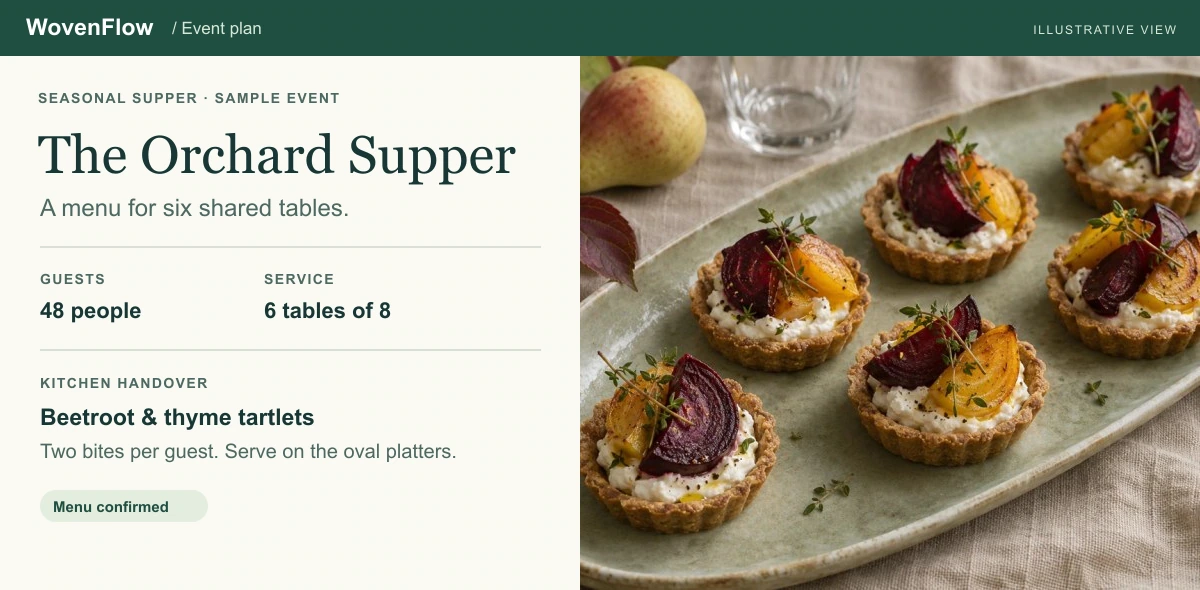
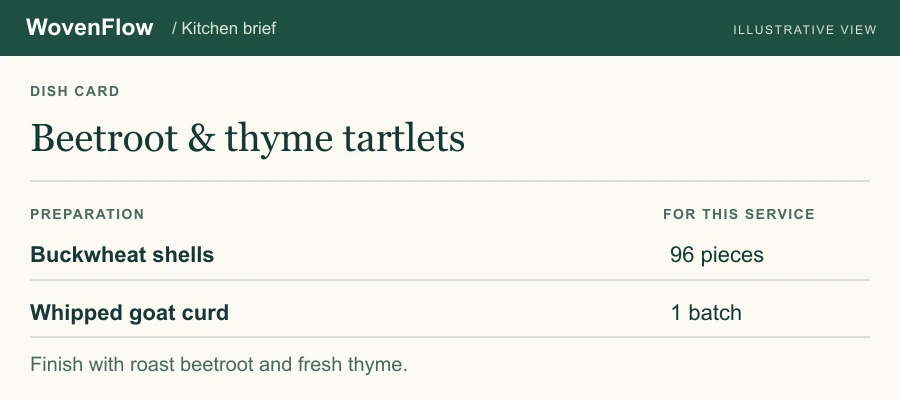
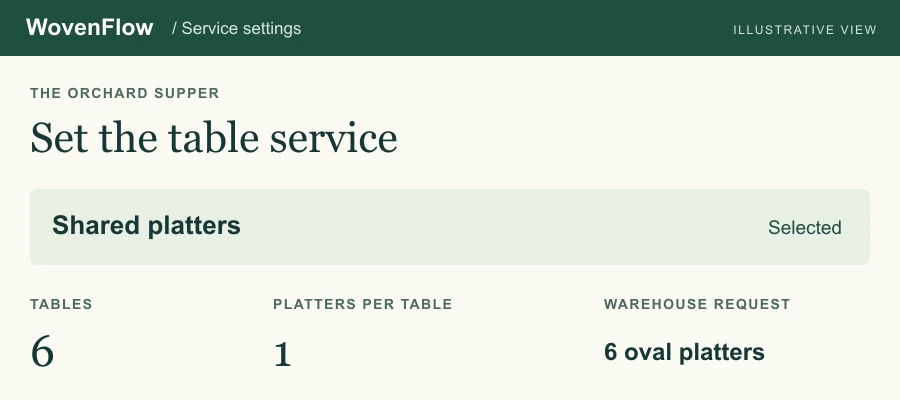
A planner promises a sharing menu. The kitchen needs to know how to serve it, and the warehouse needs to know which boards to put on the van. We built a custom catering system that carries that decision through to the pick list.

The situation

The original AppSheet setup grew out of day-to-day event work. It held hard-won knowledge about dishes, serving vessels and substitutions. When a menu changed, a rebuild had to back up the planner’s adjustments, recalculate the requirements and restore those choices. Choosing a different plate for one dinner meant making sure the next recalculation remembered it.

The decision

Give the event planner ownership of substitutions. Each change belongs to a specific booking, so the kitchen can update a menu without undoing a warehouse decision.

What we built

  • We traced a menu choice through the old system with a practical question in mind. What would the warehouse actually pick, and why?
  • We connected enquiries, proposals, menu selections, kitchen instructions and equipment requirements to the same event record.
  • We separated the standard allowance for a dish from a planner’s change for one event. The warehouse can see which dishes share an item and the combined quantity to pack.

How we checked it

In a four-day event rehearsal, the menu and tasting handover retained all 40 source selections. Before any event-specific substitutions were applied, all 150 combinations of menu selection and equipment code matched an independent calculation.

Open this case study
Case study 02
Proposals & bookingSales workflow

Offer the customer a choice and keep the quotation accurate

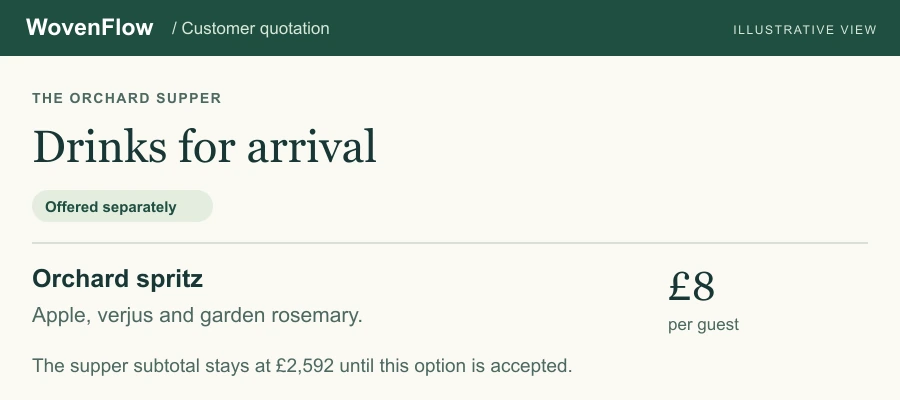
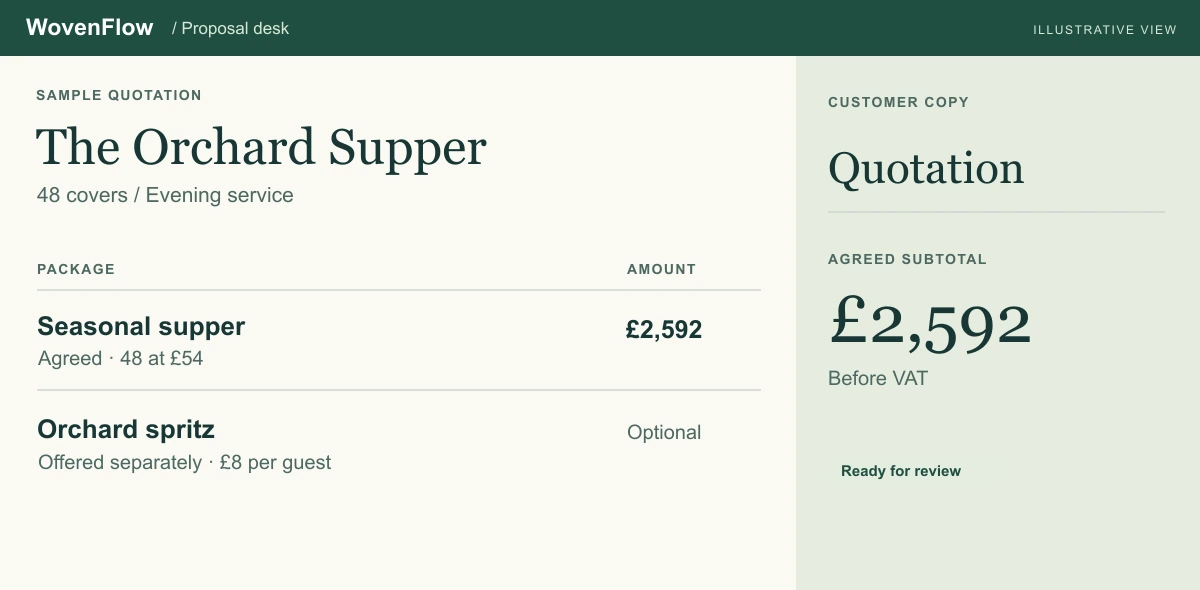
A customer can agree a supper menu and still be deciding on arrival drinks. The proposal builder lets the planner show both, price the agreed work and keep a copy of exactly what went to the customer.

The situation

A catering enquiry rarely arrives with a final menu, guest count and service style. If every suggested dish or optional upgrade becomes a charge, the total is wrong. If a planner revises a proposal later, they also need to know which prices and wording the customer saw.

The decision

Keep indicative offers and agreed charges separate. A planner can discuss options while the customer still has a reliable answer to “What have I agreed to pay?”

What we built

  • We put menu suggestions, starting prices and exact quotation lines in one editor. The planner can describe the choices while the headcount is still open.
  • An offered package stays optional. Selecting a fixed package adds its price once, even when the menu lists several inclusions.
  • The planner can edit the covering email, review the figures and issue a version that stays fixed. Customer views and acceptance attach to that copy.

How we checked it

A synthetic enquiry went through menu selection, price guidance, an edited email draft, issue, customer view and acceptance. The test used temporary records and ended before email delivery or contract signing.

Try the quotation workflowOpen this case study
Case study 03
Warehouse & dispatchEvent logistics

Two van loads matched a four-day event plan, item for item

A cup can serve breakfast on several days and travel to the venue only once. We built reservations, picking and returns around where the equipment actually is, then replayed a four-day event against its issued van lists.

The situation

Some equipment travelled ahead of the service that needed it. Some stayed at the venue to be washed and reused. Adding up each day’s requirements would overstate the load, while releasing equipment early could promise the same stock to another event.

The decision

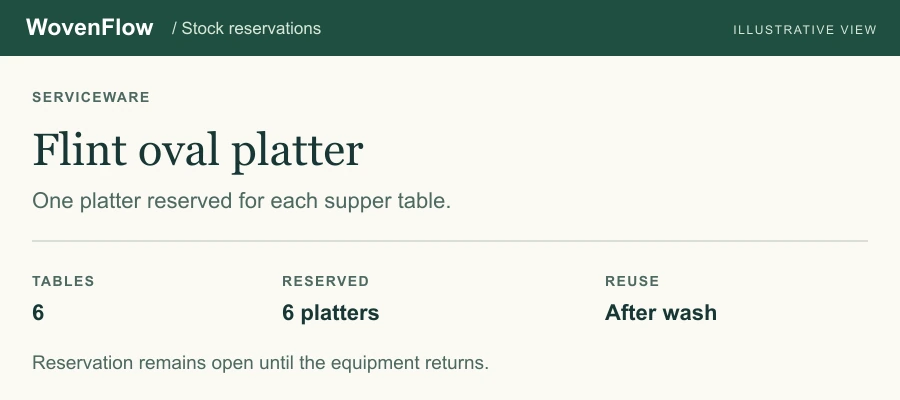
Reserve stock for the time it is away from the warehouse. An item that stays at the venue overnight can cover another service while remaining unavailable to another event.

What we built

  • We linked service dates, stock reservations, van loads, washing and collection so the warehouse can follow a physical item between services.
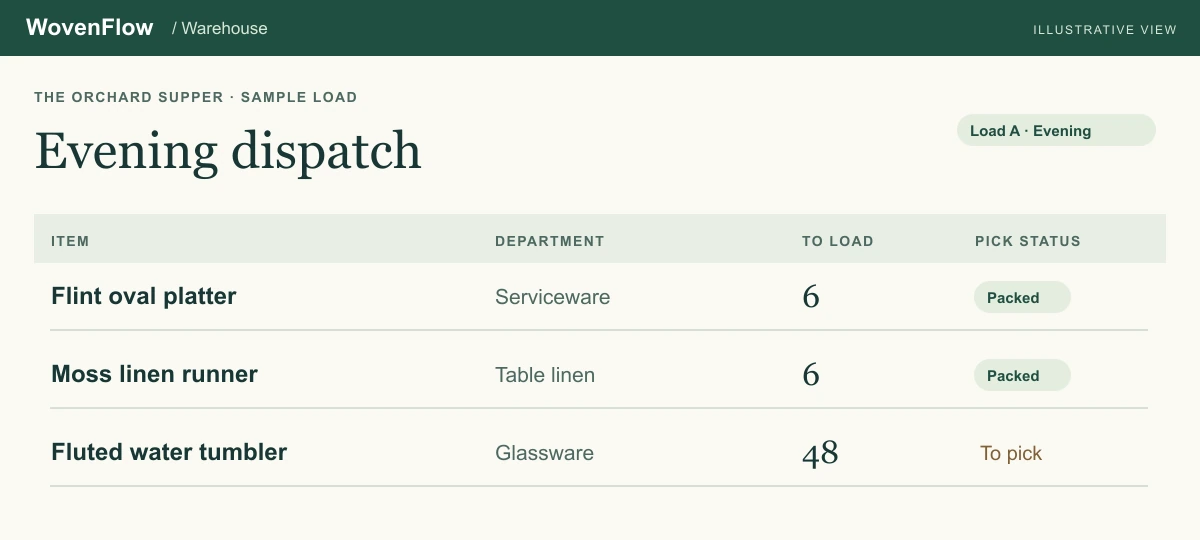
  • A picker can see the dish or service behind a requirement, check a substitution and record what was packed.
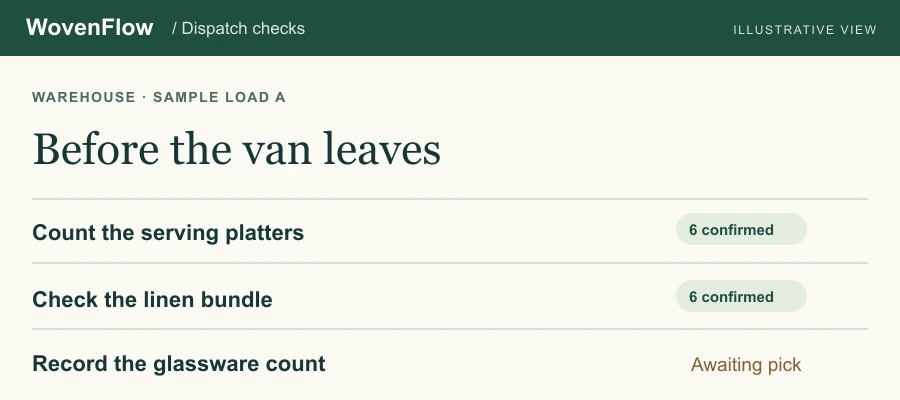
  • We added checks at dispatch and collection. In the rehearsal, an outstanding equipment return held up final collection until a member of the team recorded it.

How we checked it

We replayed the menu selections and substitutions with the issued van lists held back for comparison. The custom system calculated 554 equipment units for Monday and 726 for Tuesday. Both matched the issued figures, including zeroes for equipment that stayed behind.

Open this case study

Work with WovenFlow

What would you
change first?

You might have a brief ready or just know that something takes too long. Tell us where you’d like to start.

Talk through your project